Wild camping
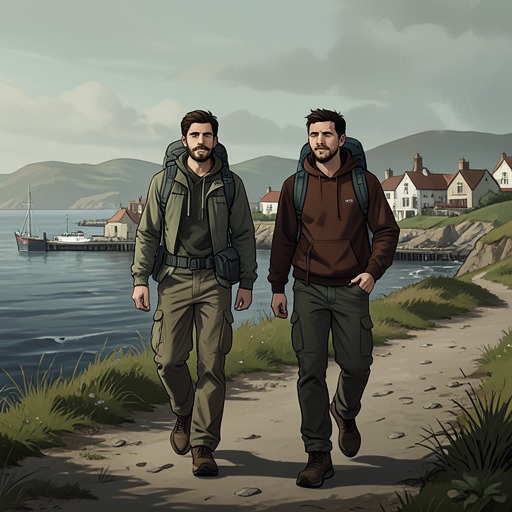
The Salt PathIn The Salt Path, wild camping is more than a travel choice: it is Ray and Moth’s improvised answer to losing their home, a daily practice that makes the path itself a provisional place of belonging. The tent can offer shelter, familiarity and a reason to keep moving, but its meaning changes with the ground beneath it. On the coast, sleeping outside can feel like freedom; in a city, the same lack of walls becomes exposure. The book holds these experiences together, showing both the agency of choosing a tent and the severe limits imposed by having nowhere else to go.
A response to housing exclusion
After losing their house and holiday-rental business, Ray and Moth need somewhere to stay while confronting Moth’s diagnosis and the possibility of his declining health. Renting would seem the obvious next step, but the practical choices close in quickly. Their credit rating has collapsed after repossession, they have no income, and a campsite’s best offer is eighty pounds a week, with no housing benefit available to cover the fee. In a midsummer holiday destination, caravans are booked by visitors able to pay more. Friends have no spare room or garden they can offer for more than a few weeks.
The council offers little prospect of suitable help. It can put them on a waiting list, but they are low priority; the immediate accommodation available is a bed-and-breakfast room mainly used by people with drug and alcohol problems. At the council offices, a staff member says that unless Moth is likely to die within the next year, he is not ill enough to count as a priority. The exchange makes the tent an active preference, but not a preference made from equal alternatives: they conclude that they would rather be in it than accept the placement. Wild camping begins within a housing system that has left them with few affordable, appropriate places to settle.
The narrative also questions the narrow public image of homelessness as a person sleeping on a pavement, perhaps with a dog and a begging bowl. Figures discussed in the book show how official categories and counting methods can obscure the scale and variety of housing need. Research by Crisis and the Joseph Rowntree Foundation recorded at least 280,000 UK households claiming to be, or soon to become, homeless in 2013, while only 52,000 were accepted as statutorily homeless. A different count by the Homelessness and Information Network, funded by the Greater London Authority, estimated 6,508 people sleeping rough in London that year; the government’s one-night snapshot put the number at 543. Against this background, a couple living in a tent on a walking route does not fit neatly into the most familiar stereotype, even as their circumstances arise from the loss of a home.
Learning the path through the body
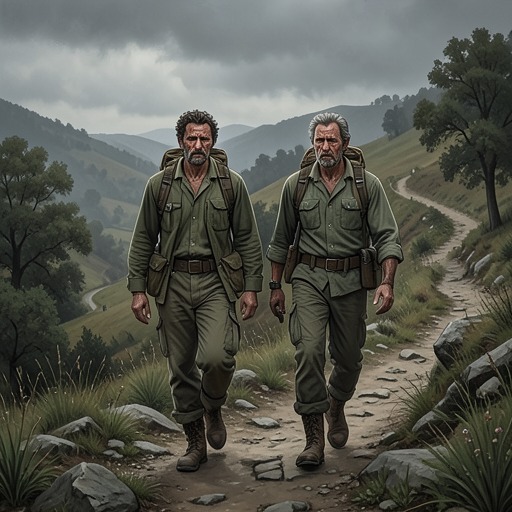
The first step on the South West Coast Path gives their journey direction before it gives them security. They begin from the monument marking the path at Minehead at half past three on a Thursday afternoon, setting out on a 630-mile walk while homeless and frightened, but able at least to go somewhere. The early terrain quickly counters the apparent simplicity of a route in a guidebook. On a steep zigzag through the woods above Minehead, they stop on a bench, catch a glimpse of the sea through the branches and reread Paddy Dillon’s instructions. The climb makes the gap between an abstract description and the effort of walking it immediate.
That physical struggle does not make the path merely an ordeal. Later, on a hot rocky track above a valley, the reflected heat burns their faces, while the wind lifts beneath Ray’s rucksack and the height brings a sense of release. Moth leans away from the sea and towards the cliff; Ray feels drawn into the open air and walks with her arms outstretched. A meeting with young, orderly backpackers makes her feel connected to the wider community of walkers. Here, camping belongs to a mobile outdoor life with shared habits, although for Ray and Moth the choice to be on the path is inseparable from having lost the security that other walkers may take for granted.
As the miles accumulate, movement develops its own structure. Pain and hunger rise and subside into ache, thirst and a steady rhythm; the sea’s recurring sound and the succession of headlands mark time. The walk that was supposed to allow them to think through their crisis becomes a kind of meditation, its attention narrowed to the present step and the next. Each combe climbed becomes a victory, each day survived a reason to continue. In that rhythm, the tent is not a permanent home but part of a repeated practice of stopping, sheltering and setting out again. Salt wind, dust and light accompany a slow wearing down of memory’s sharpest edges.
Different shelters, different kinds of exposure
The book makes clear that sleeping outside does not produce a single experience. In woodland, Ray and Moth accept an invitation from John and Gav and ride in their van away from the coast, lying on blankets as the lights disappear and country lanes give way to darkness. They follow John through the trees to a camp of tents, tarpaulins and shelters made from fallen branches. The residents sit together, talk and cook; Gav shares the food from a shopping trip. John explains that he had worked on a farm and lived in a tied cottage, but when the farm was sold the houses were separated from the land and bought as second homes. Later jobs did not provide housing, and his wages could not meet rural rents. He began camping in the wood, and others joined him as need arose.
The woodland camp is therefore both a refuge and evidence of rural housing exclusion. Its residents make a shifting village rather than a formal settlement, with people coming and going. John sees the planted pines as part of his home and speaks of the buzzards that nest there, alongside foxes, badgers, woodcock, slow worms and adders in the heath and clearings. Ray and Moth sleep in their tent on a soft bed of pine needles, warm and protected as wind rushes through the branches. In the morning John drives them to Ferrybridge on his way to work, while leaving open the possibility that they could return—though he warns that the wood might not remain available after that year. The shelter is generous but temporary, dependent on a place whose future is uncertain.
A move inland brings a stark contrast. During months away from the coast, they put their tent inside a disused meat-packing shed as rain lashes its corrugated roof. Their rucksacks stand in a corner, propping up peeling plastic; moss grows in the windows, insulation hangs from open rafters, and a strip light flickers overhead. A wood burner has melted the plastic wall covering. The building has been used as a processing room, and its makeshift protection does not restore the peace they had found outdoors. They are grateful for a roof, but feel uprooted and disconnected. The tent supplies a familiar enclosure even in an unsuitable building, while the setting shows how thin the line is between having shelter and feeling at home.
The urban night in Plymouth reverses the coast’s emotional geography. Unable to find an open place to sleep without drawing attention, they spread mattresses and sleeping bags on a hidden patch of grass beside Smeaton’s Tower rather than raise the tent. Streetlights keep the scene in permanent twilight, and every footstep, raised voice or car door makes Ray jolt with fear. On the path, wildness had not made her nervous; among densely packed people, without the tent to screen them, she feels exposed and vulnerable. As morning breaks, they pack their bedding away and boil water on a bench, relieved simply that the night has ended. The contrast shows that camping’s relative freedom depends on circumstance: open land can feel protective, while a city’s public space can leave sleepers conspicuous and unsafe.
Belonging, return and the final tent
When Ray and Moth return to the coast, the familiar sensations of grass, sun, wind and salt restore the pull of the path after months inland. They camp on Ballard Down, watching the lights of Swanage reflect across black water. Moth sits on a rock after taking four painkillers while Ray rubs his shoulders with a Chinese pain-relief gel bought from a herbal shop. The gel does not work, but the gesture gives them something to do for his pain. Their conversation turns towards a future that would combine earned rent, Moth’s retraining and the possibility of work for Ray. The camp is again a stopping place, but this time the imagined destination is a room of their own rather than an indefinite continuation of life outdoors.
By the southernmost point, Ray’s understanding of home has changed. She knows they will not return to the farm, the slate floor, the cats, the garden or the familiar night sky above the mountains. The path, sometimes no wider than a foot of dirt, has become home not because it is property but because walking lets her move forward. At the same time, the change is not presented as a simple triumph over loss: she describes a gradual acceptance after resisting what could not be changed and feeling anger at a bureaucratic system unable to see their circumstances. She comes to feel part of the elements without needing to own land. When Moth stands stiffly, she holds his pack so he can put his arms through it, and together they turn north.
Near the end of their journey, a final tent pitches them temporarily on a cliffside among scrub, with the Channel beyond its doorway. They have money for a deposit and first month’s rent, noodles in their packs and a student loan expected in a few weeks. Their homeless life is about to end, but that prospect brings its own uncertainty: Ray wonders who she will be when she wakes without putting on her rucksack to walk another day. They fold the tent’s duct-taped poles in bright sunlight, and on the last night close its flap against the southerly wind for the final time. The tent has been shelter, familiar enclosure and the means to keep moving; leaving it marks neither a return to the lost home nor the erasure of the journey. It makes possible a hopeful turn towards a future whose shape they do not yet know.